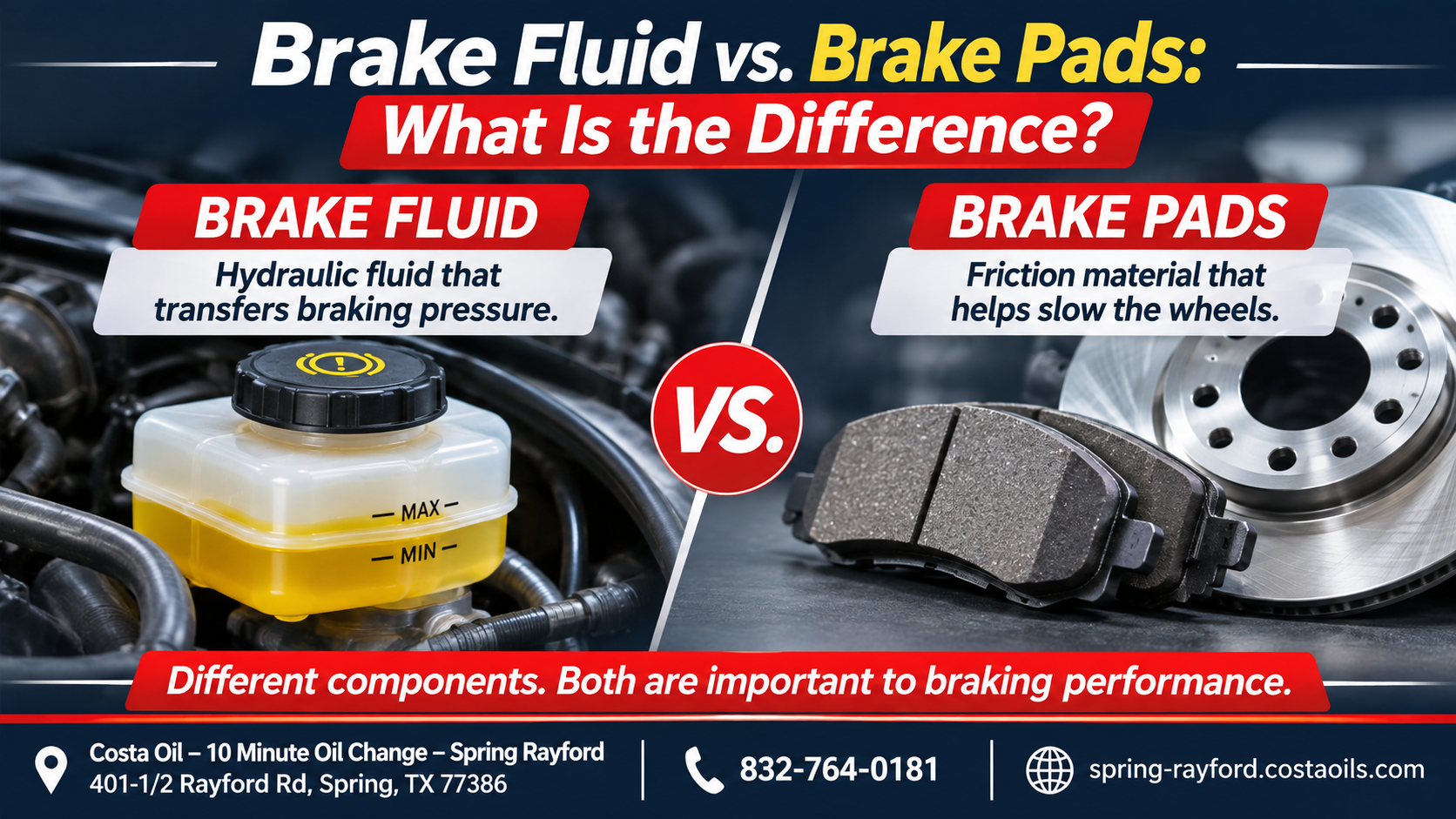
Brake Fluid vs. Brake Pads: What Is the Difference?
Your vehicle's braking system uses several parts to help you slow down and stop safely. Two terms you may hear during vehicle maintenance are brake fluid and brake pads. They sound like they belong to the same service, but they serve very different purposes. Brake fluid is a liquid that transfers pressure through the hydraulic braking system. Brake pads are physical components that press against the brake rotors to create the friction needed to slow the vehicle.
Because these parts do different jobs, they also need different types of maintenance. If you are looking for brake fluid service near you, it helps to understand whether your vehicle needs brake fluid maintenance, brake pad service, or a more complete brake inspection. For drivers looking for brake services in Spring, TX, knowing the difference can also help you ask better questions before approving maintenance.
What Is Brake Fluid?
Brake fluid is a specialized hydraulic fluid used by many vehicle braking systems. When you press the brake pedal, the system uses hydraulic pressure to transfer that force through the brake fluid. This pressure reaches the components that apply the brakes.
In simple terms, brake fluid helps carry the force from your foot to the braking components. The fluid needs to meet the specifications set by the vehicle manufacturer. Different vehicles can require different brake fluid types, so drivers should always check the owner's manual before replacing it.
Why Does Brake Fluid Matter?
Brake fluid operates under changing temperatures and pressures. Over time, brake fluid can absorb moisture from the surrounding environment. This can affect its performance and lower its boiling point. That is one reason some vehicle manufacturers recommend replacing brake fluid at a specific time or mileage interval.
The correct brake fluid maintenance schedule depends on the vehicle. You should not assume that every car needs a brake fluid flush at the same interval.
What Are Brake Pads?
Brake pads are physical parts of the braking system. When you press the brake pedal, the brake system applies pressure that moves the brake pads against the brake rotors. The resulting friction slows the wheel and helps bring the vehicle to a stop.
Because brake pads work through friction, they gradually wear down. The rate of wear varies from one vehicle to another. A driver who spends most of the day in stop-and-go traffic may use the brakes more often than someone who drives mainly on open highways. Vehicle weight, driving habits, road conditions, towing and other factors can also affect brake pad wear.
Why Do Brake Pads Need Service?
Brake pads do not last forever. As they wear, they eventually reach a point where they need replacement. The vehicle manufacturer or brake technician may provide guidance based on the vehicle and the condition of the pads. You should also pay attention to changes in braking performance.
Unusual squealing, grinding, vibration, pulling, or changes in pedal feel can indicate that your braking system needs attention. These symptoms can have several possible causes, so a proper inspection should identify the actual problem.
Brake Fluid vs. Brake Pads: The Main Difference
The easiest way to understand the difference is to look at their jobs.
Brake Fluid | Brake Pads |
Hydraulic fluid | Physical braking component |
Transfers pressure through the brake system | Creates friction against the rotor |
Can absorb moisture over time | Wears down through use |
May require scheduled replacement | Requires replacement when worn |
Requires the correct manufacturer specification | Requires the correct part for the vehicle |
Both matter, but they require different maintenance. Replacing brake pads does not replace brake fluid. Changing brake fluid does not replace worn brake pads. Your vehicle may need one service, both services, or neither at a particular time.
How Do You Know If Your Brake Fluid Needs Attention?
Brake fluid maintenance usually follows the vehicle manufacturer's recommendations. Check your owner's manual for information about the recommended fluid type and replacement schedule.
You should also pay attention to changes in braking. A brake warning light, unusual pedal feel, or other braking problem can require professional inspection. However, these symptoms do not automatically mean that the brake fluid needs replacement. A qualified technician should inspect the system and determine the likely cause.
What About Low Brake Fluid?
If the brake fluid level appears low, do not simply assume that you need a fluid flush. A low fluid level can have different causes. Brake component wear or a leak can affect fluid levels, among other possibilities. The right approach is to identify why the level is low before deciding what service the vehicle needs.
How Do You Know If Your Brake Pads Need Service?
Brake pads gradually wear as you drive. Some vehicles have wear indicators that can produce a noise when the pads approach a certain wear level. Other vehicles may provide different warning signs. You may notice:
Squealing or grinding when braking
Reduced braking performance
Vibration
A change in pedal feel
A warning light on some vehicles
Visible pad wear during an inspection
These signs do not always point directly to the brake pads. For example, vibration can have several causes. A noise can also come from different brake or wheel components. That is why you should not order a brake pad service based only on an online symptom list.
Can You Need Brake Fluid and Brake Pad Service at the Same Time?
Yes, a vehicle can need both. Brake pads wear because they create friction during braking. Brake fluid can become contaminated or reach its scheduled replacement interval. These processes happen independently.
For example, your brake pads may still have useful service life even though your manufacturer recommends replacing the brake fluid. In another situation, your brake pads may need replacement while the brake fluid remains within its recommended service period. A proper maintenance schedule helps you keep track of both.
Brake Fluid Flush vs. Brake Pad Replacement
These are two completely different services. A brake fluid flush removes old brake fluid and replaces it with the correct new fluid using the appropriate service procedure. Brake pad replacement removes worn brake pads and installs the correct replacement components.
One service deals with hydraulic fluid. The other deals with a physical friction component. If a shop recommends either service, ask what the vehicle needs and why. A good maintenance conversation should include the reason for the recommendation rather than simply giving you a list of services.
What Happens If You Ignore Brake Maintenance?
Ignoring scheduled brake maintenance can create bigger problems. Worn brake pads can eventually affect other braking components. Delaying fluid maintenance can also allow old or moisture-affected fluid to remain in the system longer than the manufacturer recommends.
More importantly, changes in braking performance can affect safety. If your brake pedal feels different, your vehicle pulls when braking, you hear persistent grinding, or the vehicle does not stop as it normally does, have it inspected. Do not assume that a simple fluid service or pad replacement will automatically fix the issue. A technician needs to identify the actual cause.
Brake Maintenance in Spring, TX
Spring drivers deal with a mix of local traffic, stop-and-go driving and highway commuting. Daily driving around busy roads can mean frequent braking. Longer trips can also place different demands on the braking system. This makes regular vehicle maintenance important.
If your vehicle's manufacturer recommends a specific brake inspection or fluid replacement schedule, keep that service on your maintenance calendar. You should also have the brakes checked when you notice something different.
Signs You Should Not Ignore
Pay attention if you notice:
A soft or spongy brake pedal
New brake noise
Grinding while braking
Vibration
Pulling to one side
Reduced stopping performance
A brake warning light
A visible fluid leak
These symptoms can have different causes. If you experience a serious loss of braking ability, stop driving when it is safe and seek appropriate professional assistance.
Looking for Brake Fluid Service Near Me?
If you search for brake fluid service near me, do not choose a provider based only on location. Ask whether the service matches your vehicle manufacturer's requirements. Before approving a brake fluid service, ask:
Does my vehicle need a brake fluid replacement now?
Check your owner's manual and ask the technician to explain the recommendation.
What type of brake fluid does my vehicle require?
Use the specification listed by the vehicle manufacturer.
Does the service include a full fluid replacement?
Make sure you understand whether you are getting a top-off, inspection, or complete fluid service.
Does the vehicle need other brake work?
If you notice braking problems, ask for an inspection rather than assuming the fluid is the only issue.
What About Brake Services in Spring, TX?
Drivers searching for brake services in Spring, TX should understand that brake maintenance can include several different services. Depending on the vehicle and its condition, these may include:
Brake inspections
Brake pad service
Brake rotor service
Brake fluid maintenance
Other brake-system repairs
Not every service provider offers every type of brake work. Service availability can also change, so confirm what a location currently offers before visiting. Costa Oil Spring Rayford focuses on oil-change and selected automotive maintenance services. If you need a specific brake service, contact the location first to confirm availability for your vehicle.
Where Does a 10-Minute Oil Change Fit Into Brake Maintenance?
An oil change and brake service address different parts of your vehicle, but routine service visits can still help you stay aware of general vehicle condition. Costa Oil – 10 Minute Oil Change – Spring Rayford provides drive-through oil-change service designed to take about 10 minutes. Customers can stay in their vehicles during the oil-change service, and no appointment is required.
The location also performs basic vehicle checks during its oil-change service. These checks can help identify visible concerns, but they do not replace a dedicated brake inspection when you have a braking problem. If your vehicle shows a serious brake warning sign, seek the appropriate brake professional rather than relying on a quick oil-change visit to diagnose the problem.
Brake Fluid Maintenance and Brake Pad Service Are Both Important
Brake fluid and brake pads work together within the braking system, but they do very different jobs. Brake fluid transfers hydraulic pressure. Brake pads create friction against the brake rotors. That means each component needs its own maintenance plan.
Follow your manufacturer's maintenance schedule for brake fluid. Pay attention to brake pad wear and changes in braking performance. If you hear a new noise, feel vibration, notice a soft pedal, or experience reduced stopping performance, arrange for a professional inspection. Do not assume that every brake problem requires the same service. The right maintenance starts with finding the actual cause.
Frequently Asked Questions
Is brake fluid the same as brake pads?
No. Brake fluid is a hydraulic fluid that transfers pressure through the braking system. Brake pads are physical components that create friction against the rotors to slow the vehicle.
How often should brake fluid be changed?
The correct interval varies by vehicle. Check your owner's manual for the manufacturer's recommended brake fluid maintenance schedule.
How often should brake pads be replaced?
Brake pad life varies based on the vehicle, driving habits, traffic conditions and other factors. Have the pads inspected and replace them when they reach the manufacturer's or technician's recommended wear limit.
Is a brake fluid flush the same as a brake pad replacement?
No. A brake fluid flush in Spring, TX replaces old brake fluid. Brake pad replacement removes worn pads and installs new ones. They address different parts of the braking system.
Can worn brake pads affect braking performance?
Yes. Worn pads can affect braking performance, but other brake or vehicle problems can cause similar symptoms. A professional inspection can identify the cause.
Where can I find brake fluid service near me?
Spring drivers can contact local automotive service providers and ask about brake fluid service availability. Always confirm that the provider can service your specific vehicle and use the manufacturer-required fluid.
Does Costa Oil offer brake services in Spring, TX?
Costa Oil Spring Rayford provides oil-change and selected automotive maintenance services. Brake-service availability can vary, so contact the location before visiting specifically for brake work.
Keep Your Brake System on Your Maintenance List
Brake maintenance does not have to be complicated. Know when your vehicle needs brake fluid service. Keep track of brake pad wear. Follow your manufacturer's maintenance schedule and pay attention when your vehicle starts braking differently.
If you are comparing brake fluid service near me or looking for brake services in Spring, TX, ask questions before approving the work. Understanding what the service does can help you make a better decision for your vehicle. For routine oil-change service, Costa Oil – 10 Minute Oil Change – Spring Rayford offers a convenient drive-through experience at:
401 1/2 Rayford Rd, Spring, TX 77386
832-764-0181
When it comes to your brakes, do not guess. If something feels or sounds different, have the vehicle checked by the appropriate qualified professional.
