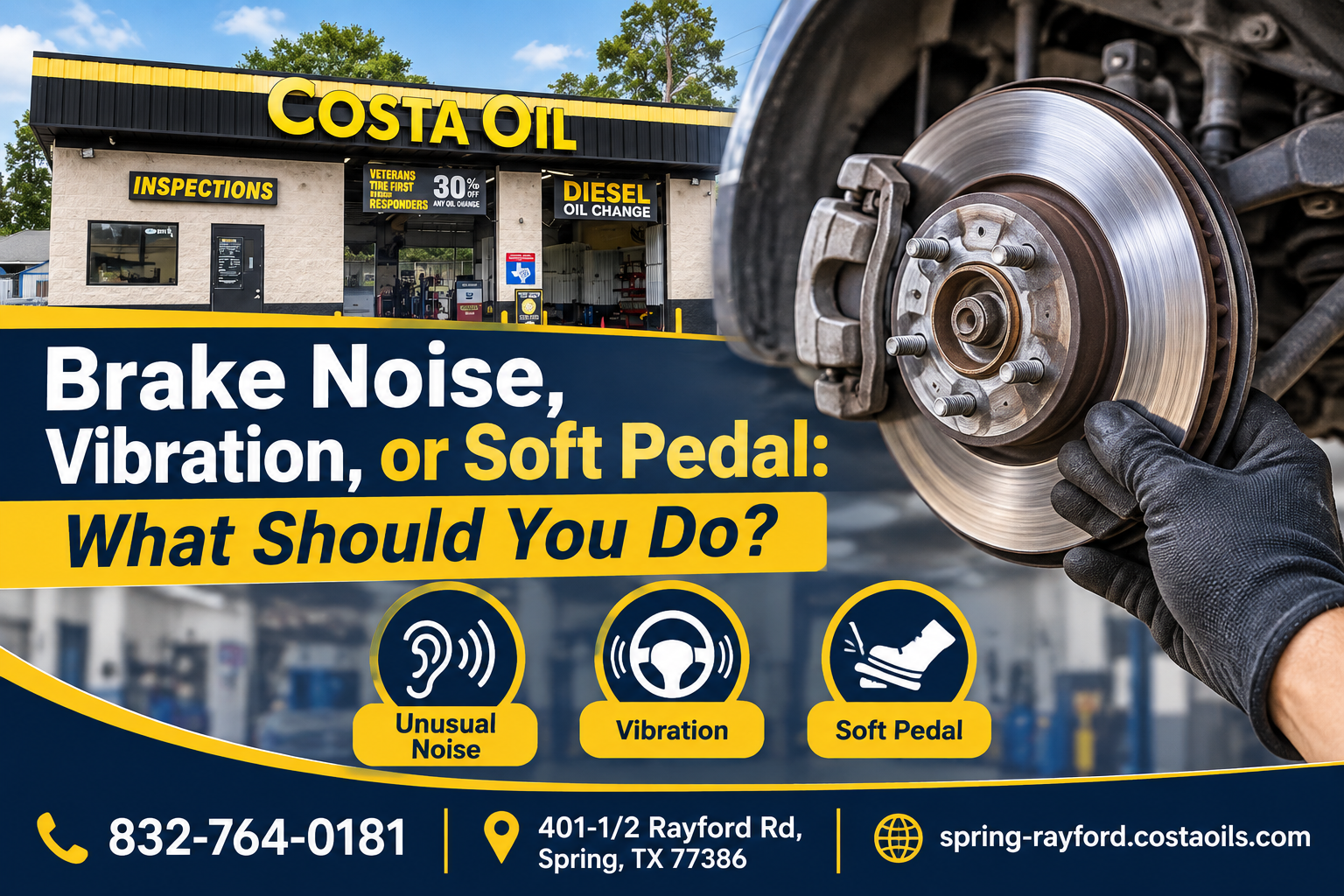
Brake Noise, Vibration, or Soft Pedal: What Should You Do?
Your brakes should feel predictable every time you drive. You press the pedal, the vehicle slows down, and you come to a stop without unusual sounds, shaking, or extra effort. When that changes, it is worth paying attention.
A new brake noise, vibration, pulling, or a brake pedal that suddenly feels different can have several possible causes. Some may be minor, while others may need prompt attention. You cannot identify the exact cause from a symptom alone, so a proper inspection is the safest way to find out what is happening.
For Spring, TX drivers, regular brake checks are an important part of vehicle care. Heavy traffic, frequent stops, daily commuting, and highway driving can all affect how often you use your brakes. If your braking feels different from normal, do not ignore it. This guide explains some common brake warning signs, what you should do when they appear, and when you should contact a qualified brake technician.
Why Should You Pay Attention to Brake Changes?
Your braking system has several components that work together to slow and stop your vehicle. Depending on the vehicle, these can include brake pads, rotors, calipers, brake fluid, brake lines, drums, shoes, and other hardware. These parts wear at different rates. Your driving habits can also affect brake wear. A vehicle driven mostly on open highways may experience different brake use from one driven through busy city traffic every day.
That is why there is no single mileage number that tells every driver when brakes need service. Your owner's manual should provide the recommended maintenance schedule for your vehicle. You should also pay attention to changes in how the brakes feel and sound.
1. You Hear a New Brake Noise
One of the most noticeable brake warning signs is a sound that was not there before. You may hear squeaking, squealing, grinding, clicking, or another unusual sound when you apply the brakes. A noise does not automatically mean that a specific brake component has failed. Different conditions can create similar sounds, and the vehicle needs to be inspected to determine the actual cause.
For example, some brake noises can occur temporarily because of moisture or road conditions. Other sounds may continue and require attention.
What should you do?
Pay attention to when the noise occurs. Does it happen every time you brake? Does it occur only at low speeds? Does it become louder after the vehicle has been driven for a while?
That information can help a technician during an inspection. If the noise continues or gets worse, arrange for a professional brake inspection instead of assuming it will go away.
What about grinding?
Grinding deserves particular attention. If you hear a harsh grinding sound when braking, do not treat it as normal brake noise. Have the vehicle checked as soon as possible. If braking performance has also changed, avoid continuing to drive the vehicle until a qualified professional has assessed the problem.
2. Your Brake Pedal Feels Soft
A brake pedal should have a consistent feel. If you suddenly notice that the brake pedal feels soft, spongy, unusually low, or different from how it normally feels, take the change seriously. A soft pedal can have different possible causes. The braking system uses hydraulic pressure, and problems involving brake fluid or other components can affect pedal feel. However, you should not try to determine the cause yourself based only on the pedal.
What should you do?
If the pedal feels noticeably different, arrange for a brake inspection. If the pedal suddenly drops much farther than usual or braking performance is significantly reduced, treat the situation as urgent. Stop driving when it is safe to do so and seek appropriate professional assistance. Do not continue driving simply because the vehicle can still stop.
3. Your Vehicle Vibrates When You Brake
A vibration during braking is another reason to have your vehicle checked. You might feel the vibration through the brake pedal, steering wheel, or the vehicle itself. There are several possible causes of braking vibration, and the symptom alone cannot tell you which component is responsible. Other vehicle systems can also create vibration, so it is important not to assume that the brakes are automatically the cause.
When should you get it checked?
If the vibration is new, happens repeatedly, or becomes stronger over time, schedule an inspection. Tell the technician when you notice the vibration and whether it happens during light or harder braking. That information can help them assess the vehicle. If the vibration is severe or accompanied by reduced braking performance, seek professional attention promptly.
4. Your Vehicle Pulls to One Side
Does the vehicle move left or right when you apply the brakes?
Pulling during braking should not be ignored. Several issues can produce similar symptoms. The cause could involve the braking system, tires, wheel alignment, suspension, or another vehicle component. Because of this, you should not assume that replacing one brake component will solve the problem.
The right approach
Have the vehicle inspected by a qualified technician. Explain what you feel when braking and whether the vehicle also pulls during normal driving. A proper inspection can help separate a brake-related concern from a tire, alignment, suspension, or other issue.
5. You Need More Pressure to Stop
You know how your vehicle normally responds when you press the brake pedal. If you suddenly need to press harder than usual to slow down, take notice. A change in stopping performance is more important than a minor noise because it can affect how quickly and predictably the vehicle responds. Do not try to adjust your driving style around a braking problem.
What should you do?
If braking performance has changed, have the vehicle checked by a qualified brake professional. If the vehicle has a major loss of braking ability, stop driving as soon as it is safe and arrange for appropriate assistance. Brake problems are not something to postpone simply because the vehicle can still move.
6. Your Brake Warning Light Comes On
A brake-related dashboard light is another important warning. Different vehicles use different warning systems. A brake warning light may relate to the parking brake, brake fluid level, or another braking-system concern. Your owner's manual can explain what the specific light means for your vehicle. Do not assume that every brake warning light means the same thing.
What should you do?
Check the owner's manual and pay attention to any other symptoms. If the warning light remains on or appears together with a change in brake performance, arrange for professional inspection. If you see a warning light that indicates a serious braking problem, follow the vehicle manufacturer's guidance and avoid driving if doing so could be unsafe.
7. Your Brake Fluid Is Low
Brake fluid is an important part of many vehicle braking systems. If the fluid level is low, simply adding more fluid may not answer the bigger question: why did the level drop?
There could be several possible reasons, and the vehicle should be checked if the fluid level repeatedly becomes low. Brake fluid also has its own maintenance requirements. Some manufacturers recommend replacing it at specific intervals, while others provide different guidance.
Follow your vehicle's schedule
Check your owner's manual for the correct brake fluid specification and recommended service interval. Do not assume that every vehicle needs the same brake fluid service. If you are searching for brake inspection near me, ask whether the provider can inspect the brake system and explain whether your vehicle needs additional brake fluid service.
Do Not Try to Diagnose Brake Problems From Symptoms Alone
Search results can help you understand possible causes, but they cannot replace a physical inspection.
For example, the same vibration can have more than one possible cause. A squealing sound may not always mean the same thing. A soft pedal may require a completely different response from ordinary brake noise. That is why a qualified technician should inspect the vehicle when braking changes. The goal is not to guess which part needs replacement. The goal is to find out what is actually happening.
When Should You Stop Driving?
Not every brake noise requires you to immediately stop the vehicle. However, some symptoms should receive urgent attention. Stop driving when it is safe and seek appropriate assistance if you experience:
Major loss of braking ability
A brake pedal that suddenly drops unusually low
Severe grinding accompanied by braking problems
A serious brake warning light
Smoke or a strong burning smell from the brake area
A vehicle that becomes difficult to stop
A sudden and significant change in braking performance
If you are unsure whether the vehicle is safe to drive, it is better to seek professional advice than take a risk.
How Often Should You Have Your Brakes Checked?
Your vehicle manufacturer should provide guidance on brake inspections and maintenance. You should also have the brakes checked when you notice a change. Spring drivers may use their brakes frequently because of traffic, intersections, school zones, commuting, and local stop-and-go driving. Drivers who tow or regularly carry heavy loads may also place different demands on their braking system. Your maintenance schedule should account for your specific vehicle and driving conditions. A brake inspection can also be a useful part of routine vehicle maintenance when your vehicle is already receiving scheduled service.
Looking for Brake Inspection Near Me in Spring, TX?
If you are searching for brake inspection near me, focus on finding a qualified professional who can inspect the system and explain what they find. Ask what the inspection covers and whether the location handles the type of brake service your vehicle requires.
Costa Oil – 10 Minute Oil Change – Spring Rayford provides oil-change and selected preventative maintenance services for local drivers. The location also performs basic vehicle checks during its oil-change service.
However, not every brake concern can be handled during a quick oil-change visit. Serious brake symptoms, diagnosis, or repairs may require a dedicated brake technician or repair facility. If you specifically need brake service, contact the location first to confirm current brake-service availability.
Keep Brake Maintenance on Your Regular Checklist
Brake maintenance is not something you should think about only when the vehicle fails to stop properly. Pay attention to changes in sound, pedal feel, vibration, stopping performance, and dashboard warnings. Follow your manufacturer's maintenance schedule and have unusual symptoms checked instead of guessing at the cause.
A simple change may turn out to be minor. It may also point to a problem that needs prompt attention. You cannot know which one it is without checking. If your brake pedal feels soft, your vehicle vibrates while braking, or you notice persistent brake noise, contact a qualified professional for an inspection.
