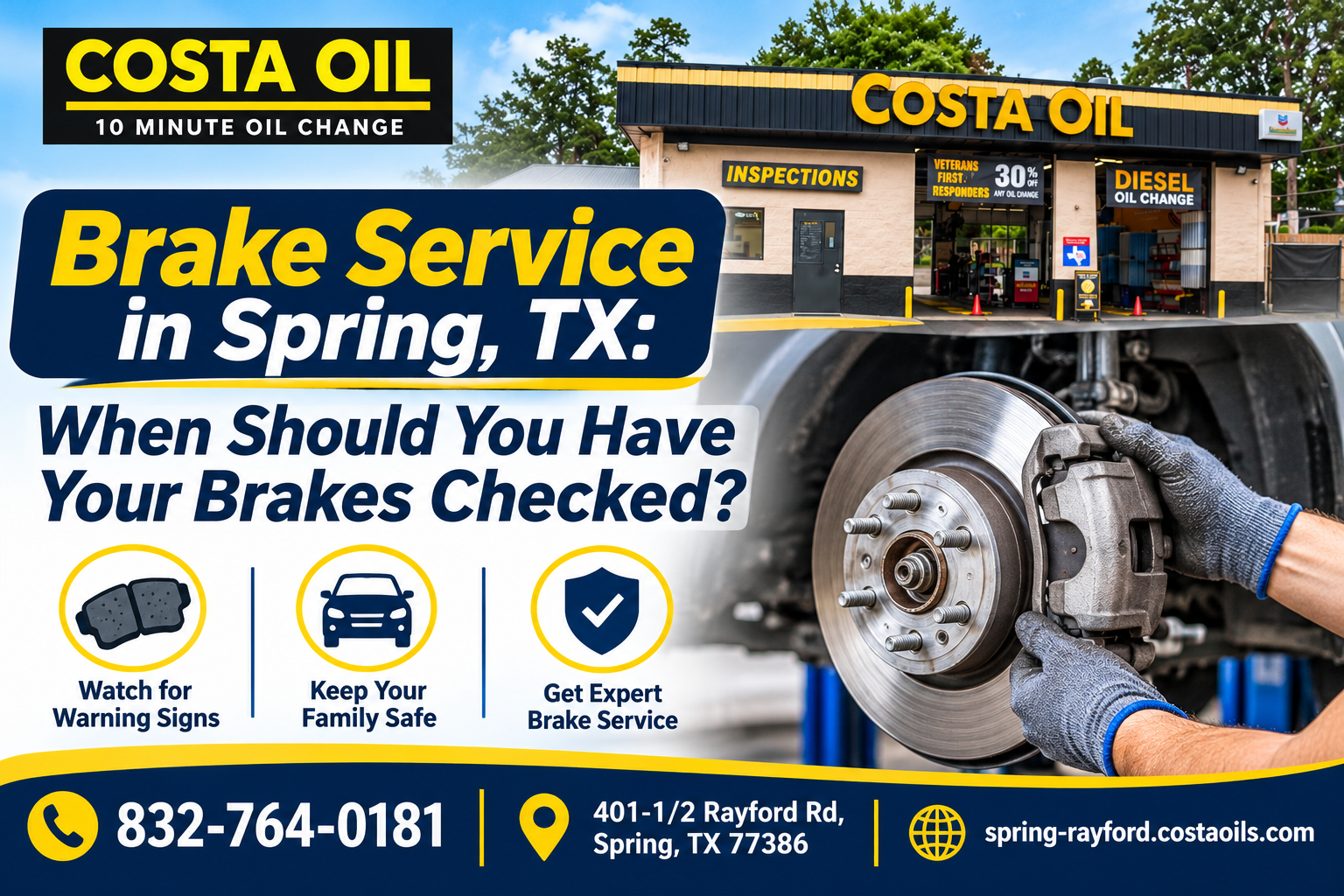
Brake Service in Spring, TX: When Should You Have Your Brakes Checked?
Your brakes are one of the most important safety systems on your vehicle. You use them every time you slow down, stop at a traffic light, pull into a parking space, or deal with sudden traffic. The difficult part is knowing when your brakes need attention. Brake components wear gradually, and the first signs are not always obvious. You may notice a noise, a change in pedal feel, or a vibration. Sometimes, you may not notice anything at all until the vehicle needs more braking effort than usual.
That is why regular brake checks should be part of your vehicle maintenance routine. If you are looking for brake service in Spring, TX, start by understanding what your vehicle's brakes need, which signs deserve attention, and when you should have the system checked by a qualified professional.
Why Regular Brake Checks Matter
Brake systems contain several components that work together. Depending on the vehicle, these can include brake pads, rotors, calipers, brake fluid, lines and other hardware. These components do not all wear at the same rate. Your driving habits, traffic conditions, vehicle weight, road conditions and other factors can affect how quickly brake components wear.
Spring drivers may spend a lot of time in stop-and-go traffic, on local roads or commuting through busy areas. Repeated braking can place more demand on the braking system than steady highway driving. Regular checks can help you keep track of brake conditions and address concerns before they affect your driving experience. A brake check does not mean that every vehicle needs new brake parts. The purpose is to determine whether the system appears to be operating properly and whether any maintenance is due.
When Should You Have Your Brakes Checked?
There is no single mileage number that tells every driver when to inspect their brakes. Your vehicle manufacturer's maintenance schedule is a useful starting point. You should also pay attention to changes in how the vehicle brakes. If you have recently noticed something different, it is worth having the vehicle checked rather than waiting for the problem to become more noticeable. Here are some common signs that should get your attention.
Your Brakes Make a New Noise
A new noise when braking can have several possible causes. You might hear squealing, squeaking, grinding, clicking or another unfamiliar sound. Some noises can occur under certain conditions and may not indicate a serious problem. Others can be a sign that a brake component needs attention. The sound alone cannot tell you exactly what is wrong. If the noise continues, becomes louder, or appears every time you brake, have the vehicle inspected by a qualified professional.
Do not ignore grinding
Grinding sounds deserve particular attention. If you hear a harsh grinding noise when applying the brakes, avoid assuming that it is simply normal brake noise. The vehicle should be checked to determine the cause before you continue driving normally.
The Brake Pedal Feels Different
You spend enough time driving your vehicle to know how the brake pedal normally feels. If the pedal suddenly feels softer, harder, lower, or different from normal, take notice. A change in pedal feel can have several causes, and some may require prompt attention. Do not try to diagnose the cause based only on how the pedal feels. If the change is sudden or significant, have the vehicle inspected as soon as possible.
Your Vehicle Pulls When You Brake
Does your vehicle move toward the left or right when you apply the brakes?
Pulling during braking can have several possible causes. The issue may involve the braking system, tires, alignment, suspension or another component. Because several systems can create similar symptoms, a professional inspection is the right way to identify the cause. Do not assume that a pulling vehicle automatically needs brake replacement.
Your Steering Wheel or Brake Pedal Vibrates
A vibration while braking can be another reason to have the vehicle checked. You may feel the vibration through the steering wheel, brake pedal, or the vehicle itself. The cause can vary depending on the vehicle and the conditions under which the vibration occurs. If the vibration is new or becoming more noticeable, arrange an inspection rather than continuing to ignore it.
Your Vehicle Takes More Effort to Stop
A change in stopping performance deserves immediate attention. If you feel that you need to press the brake pedal harder than normal or the vehicle does not slow down as it normally does, do not treat that as routine wear. Brake performance is directly related to vehicle safety. If braking feels significantly different, have the vehicle assessed by a qualified brake professional. If you experience a serious loss of braking ability, stop driving when it is safe and seek appropriate assistance.
How Often Should Brakes Be Checked?
Brake inspection intervals vary by vehicle. Some manufacturers recommend checking brake components at specific mileage intervals or during scheduled maintenance. Others may provide different guidance depending on the vehicle's design and driving conditions. Your owner's manual should be your first reference. Your driving habits also matter. A driver who spends most of the week in heavy traffic may use the brakes more frequently than someone who mainly drives on open highways.
Other factors can include:
Frequent stop-and-go driving
Towing or carrying heavy loads
Hilly roads
High annual mileage
Driving in conditions that place additional demand on the brakes
If you regularly drive in heavy traffic around Spring, it makes sense to pay attention to brake conditions rather than waiting for a major symptom.
What Does a Brake Inspection Check?
A brake inspection is different from a brake repair.
During an inspection, a qualified technician may look at accessible brake components and assess their condition. Depending on the vehicle and inspection process, this can include checking brake pad condition, rotors, visible hardware, brake fluid and other related components. The exact inspection process varies by vehicle and service provider. The goal is to determine whether the brakes appear to need maintenance or whether another issue may require further diagnosis. A good inspection should not automatically lead to a recommendation for replacement. The recommended service should relate to the vehicle's actual condition and maintenance requirements.
Brake Pads and Rotors: What Drivers Should Know
Brake pads press against the brake rotor to help slow the vehicle. Because the pads experience friction during braking, they gradually wear. Rotors can also change over time. The amount of wear depends on the vehicle, driving conditions and brake components. That is why you should not assume that every vehicle needs pads or rotors replaced at the same mileage.
If a technician recommends brake work, ask which component needs attention and why. A clear explanation can help you understand whether the recommendation relates to visible wear, measured thickness, a braking symptom, or the manufacturer's maintenance guidance.
What About Brake Fluid?
Brake fluid plays an important role in hydraulic braking systems. When you press the brake pedal, the fluid transfers pressure through the system to help apply the brakes. Brake fluid does not last forever. Some manufacturers specify a replacement interval, while others provide different maintenance guidance. Brake fluid can also absorb moisture over time, which is one reason some vehicles require periodic fluid replacement.
If your vehicle's manufacturer recommends a brake fluid flush, follow that schedule. Drivers searching for brake fluid flush near me should compare the service with the vehicle manufacturer's requirements rather than choosing a service simply because it is advertised as a standard maintenance item.
Brake Flush vs. Brake Inspection
These two services are not the same. A brake inspection looks at the condition of the braking system. A brake fluid flush involves replacing the old brake fluid according to the appropriate service procedure. You may need one, the other, both, or neither at a particular time.
Your owner's manual can help determine when brake fluid service is due. A technician can also explain the condition of the system and what service is appropriate. This distinction matters because not every brake concern requires a fluid flush, and not every brake service issue can be addressed through fluid replacement.
Spring, TX Driving and Brake Wear
Local driving conditions can affect how often you use your brakes. A typical commute may involve repeated stops, traffic lights, congestion and sudden changes in traffic speed. Each braking event adds another cycle of use to the brake system. Drivers who frequently travel busy roads may therefore use their brakes differently from drivers who spend most of their time on open highways.
This does not mean Spring drivers automatically need more frequent brake replacement. It simply means your actual driving conditions should be considered when following your vehicle's maintenance schedule. The best approach is to combine the manufacturer's recommendations with attention to how your vehicle behaves.
What Should You Do If You Notice a Brake Problem?
Start by paying attention to the symptom. Ask yourself when it happens:
Only when braking?
At low speeds?
At highway speeds?
When the brakes are cold?
After driving for a long time?
Every time you use the brakes?
This information can help a technician understand what you are experiencing. Do not try to identify the exact failed component based only on a noise or vibration. Several different issues can produce similar symptoms. If the brakes feel unsafe or braking performance has changed significantly, stop driving when it is safe and arrange for appropriate professional inspection or repair.
Can a Quick Oil-Change Location Handle Brake Problems?
Not every brake problem belongs in a quick-service environment. An oil-change service can include basic vehicle checks, but serious brake symptoms may require a dedicated brake inspection, diagnosis or repair from a qualified automotive professional. This is an important distinction for customers looking for brake service near me.
At Costa Oil Spring Rayford, the focus remains on convenient oil-change and preventative maintenance services. The location can help with routine vehicle checks and maintenance services that it currently offers, but drivers should confirm brake-service availability before visiting specifically for brake work. If you are experiencing serious braking symptoms, do not delay professional attention simply because you are looking for a quick service location.
How to Find the Right Brake Service in Spring, TX
When comparing brake service Spring TX options, look beyond the headline price.
Ask:
What does the inspection include?
Find out whether the provider is inspecting the components related to your concern.
Why is the service being recommended?
A good provider should be able to explain the reason.
Does my vehicle actually need this service now?
Compare the recommendation with your owner's manual where appropriate.
What happens if another problem is found?
Ask whether the location performs the repair or refers you to a dedicated brake professional.
Is the service available at this location?
Service menus can vary, so confirm before making the trip.
These questions can help you choose a service based on your vehicle's needs rather than simply choosing the closest result for "brake service near me."
Brake Maintenance Should Be Part of Your Regular Car Care
You do not need to wait for a serious brake problem before thinking about brake maintenance. Follow the maintenance schedule for your vehicle. Pay attention to changes in braking performance. Have unusual noises, vibrations, pulling or pedal changes checked instead of ignoring them.
Regular brake checks can also fit naturally into your wider vehicle maintenance routine. When you have an oil change, tire service or other routine maintenance completed, it can be a useful time to ask whether your vehicle is due for any scheduled inspections.
Visit Costa Oil Spring Rayford for Routine Vehicle Service
Costa Oil – 10 Minute Oil Change – Spring Rayford provides oil-change and selected preventative maintenance services for local drivers. The location offers synthetic blend and full synthetic oil changes, along with basic vehicle checks and selected maintenance services. Customers can stay in their vehicle during the drive-through oil-change service, and no appointment is required for a standard oil change.
If you are specifically looking for brake service in Spring, TX, call ahead to confirm current brake-service availability before visiting.
