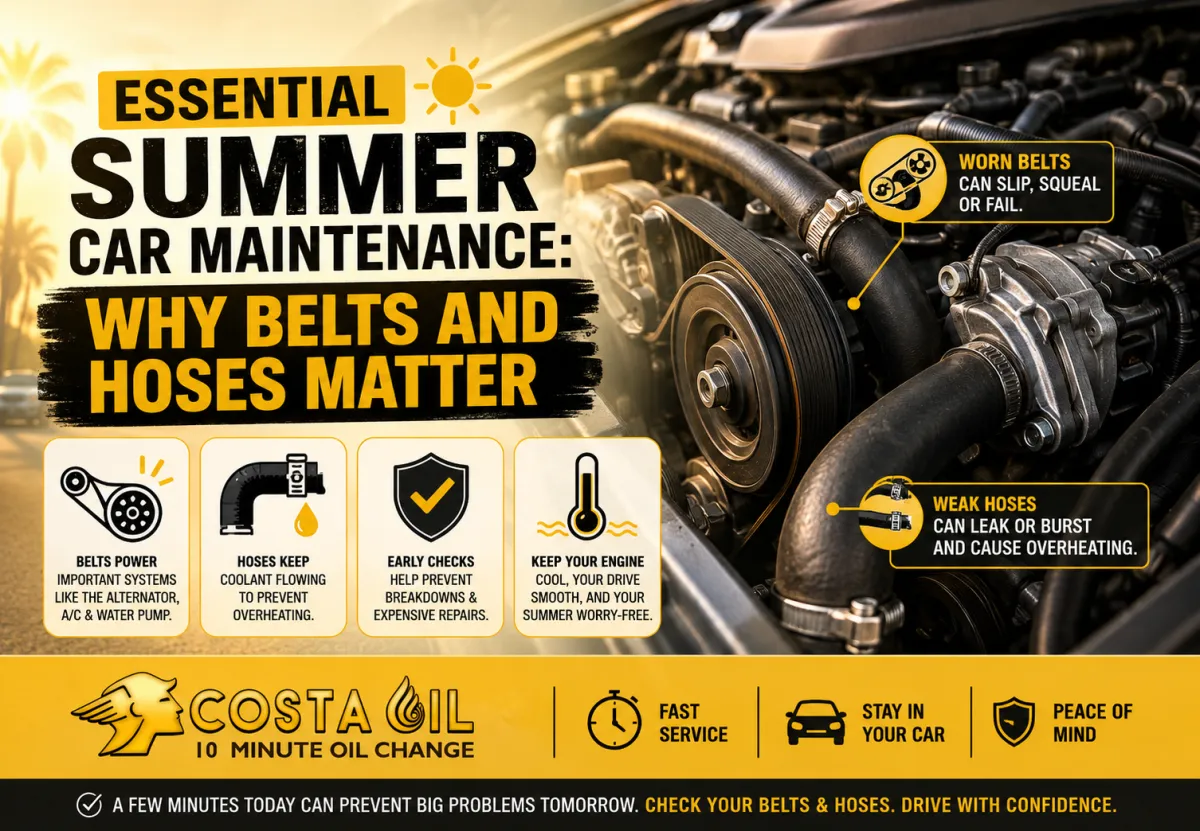
Essential Summer Car Maintenance: Why Belts and Hoses Matter
Summer driving can be hard on your vehicle, especially in a warm area like Spring, TX. Between hot pavement, stop-and-go traffic, school runs, work commutes, and weekend drives, your engine works harder than many drivers realize. While oil changes usually get the most attention, two small parts under the hood can make a big difference in how well your vehicle handles the heat: belts and hoses.
Belts help power important systems like the alternator, air conditioning, and in some vehicles, the water pump. Hoses help move coolant through the engine so it can manage temperature properly. When either one wears out, cracks, leaks, slips, or fails, your vehicle can overheat or lose performance quickly.
If you are already searching for an oil change in Spring, TX, it is a smart time to think about summer maintenance too. A quick oil change visit can also be a helpful reminder to look for early warning signs before a small issue turns into a roadside problem.
At Costa Oil Spring Rayford, drivers looking for a fast, convenient oil change Rayford Rd option can stay in their vehicle and get back on the road quickly. But beyond speed, smart maintenance starts with knowing what to watch for.
Quick Summary
Summer heat can dry out rubber belts and hoses, making them more likely to crack, leak, soften, or fail. A worn belt may create squealing sounds or affect systems like the alternator and air conditioning. A weak radiator hose can leak coolant and increase the risk of overheating. Before long drives or during your next oil change near Spring TX, check for cracks, fraying, bulges, leaks, soft spots, and loose connections. If something looks or sounds off, get it checked early. Preventive maintenance is usually easier, faster, and less stressful than dealing with an overheated engine.
Why Summer Heat Is Tough on Belts and Hoses
Your engine bay already operates in a high-temperature environment. During summer, outside heat adds more stress. This is especially true when you are stuck in traffic, driving short trips, running the air conditioning, or parking in direct sun for hours.
Belts and hoses are commonly made from reinforced rubber materials. Rubber is durable, but it does not last forever. Heat, pressure, vibration, fluid exposure, and age slowly break it down. Over time, rubber can lose flexibility, become brittle, form small cracks, or weaken near clamps and connection points.
That is why summer inspections matter. A hose may look fine at a glance but feel too soft or swollen when the engine is cool. A belt may still spin, but it could be glazed, loose, or fraying along the edges. These early signs are easy to miss until the problem becomes loud, messy, or expensive.
What Belts Actually Do Under the Hood
Many drivers hear “drive belt” or “serpentine belt” but do not always know what it controls. In simple terms, a belt transfers engine power to other components. Depending on your vehicle, it may help run the alternator, power steering pump, air conditioning compressor, and sometimes the water pump.
This means a worn belt can affect more than one system at once. A slipping belt may cause squealing when you start the car. A failing belt may reduce charging performance, weaken air conditioning, or impact cooling system function in some vehicles.
If your vehicle makes a sharp squeal under the hood, especially at startup or when the A/C is turned on, do not ignore it. The sound may be caused by a loose, worn, wet, or slipping belt. It is one of the clearest signs that your car is asking for attention.
Why Hoses Are Just as Important
Radiator and coolant hoses carry hot coolant between the engine, radiator, heater core, and other cooling system parts. Their job is simple but critical: help keep engine temperature under control.
A hose problem can create several risks. A small leak can slowly lower coolant levels. A bulging hose can burst under pressure. A loose clamp can allow coolant to escape. A brittle hose can crack when the system heats up and expands.
When coolant cannot move properly, the engine may overheat. Overheating can lead to serious damage if the vehicle continues to run while hot. That is why checking hoses before peak summer driving is worth the few minutes it takes.
Easy Belt and Hose Warning Signs to Look For
You do not need to be a mechanic to spot basic warning signs. Always let the engine cool completely before touching anything under the hood. Once it is safe, look for these signs:
1. Cracks or Cuts
Small cracks in belts or hoses can become larger as heat and pressure increase. If rubber looks split, cut, or dry, it may be nearing the end of its life.
2. Fraying Edges
A belt with frayed edges may not be tracking properly or may be wearing unevenly. This can lead to slipping, noise, or eventual failure.
3. Bulges or Blisters
Bulging hoses are a major warning sign. A bulge usually means the hose wall has weakened and may not be able to handle pressure for long.
4. Leaks Near Clamps
Check around hose ends and clamp areas. Wet spots, dried coolant residue, or a sweet smell near the engine can point to a leak.
5. Glossy or Glazed Belts
A belt that looks shiny or slick may be hardened or slipping. This can reduce grip and cause noise.
6. Soft, Spongy, or Brittle Hoses
Coolant hoses should feel firm but slightly flexible when the engine is cool. If a hose feels overly soft, swollen, rock-hard, or brittle, it needs attention.
7. Squealing Sounds
A squeal from under the hood often points to belt slip. It may happen during startup, acceleration, or when electrical or A/C load increases.
Why an Oil Change Visit Is a Good Time to Think About Summer Maintenance
Many drivers search for a car oil change near them only when the dashboard reminder appears. But an oil change is also a natural time to think about the rest of the vehicle.
Fresh oil helps reduce friction inside the engine, supports cleaner operation, and helps the engine perform the way it should. In hot weather, clean oil matters because engines are already dealing with higher temperatures and heavier seasonal use.
If you are searching for a 10 minute oil change Spring TX, Costa Oil Spring Rayford gives you a fast, stay-in-your-car option. You do not need to block out your day, sit in a waiting room, or schedule an appointment. For busy drivers near Rayford Road, that convenience makes routine maintenance easier to keep up with.
It is also a good time to ask simple questions, such as:
Is my oil level low?
Does my vehicle need conventional or synthetic oil?
Are there visible under-hood concerns?
When should I return for my next oil change?
Wondering if your vehicle actually needs synthetic oil?"
While some older vehicles run perfectly fine on conventional oil, most modern engines—and any vehicle subjected to extreme Texas heat and heavy traffic—benefit immensely from the added protection of full synthetic or synthetic blend oils. If you aren't sure what your manufacturer requires, our team can quickly pull up your exact vehicle specs right from your window.
Should You Choose Synthetic Oil in Summer?
Many modern vehicles require synthetic oil or synthetic blend oil, so the first rule is always to follow your owner’s manual. Synthetic oil is designed to perform well across a wider range of temperatures and can offer stronger resistance to breakdown compared to conventional oil.
Why does synthetic oil actually perform better in the summer? Extreme heat causes motor oil to thin out, which reduces its ability to lubricate your engine's moving parts. Synthetic oil is chemically engineered to maintain its viscosity (thickness) even under severe temperatures, ensuring your engine stays protected when the pavement is scorching.
Pro Tip:
During the hottest months of the year, we highly recommend checking your oil dipstick every two weeks to ensure your levels are safe and the oil hasn't become overly gritty.
That is one reason many drivers search for a full synthetic oil change or synthetic oil change near them during summer. Hot weather, long drives, towing, short-trip driving, and heavy traffic can all place more stress on engine oil.
If your vehicle requires synthetic oil, do not choose conventional oil just to save a few dollars. Using the correct oil type and viscosity helps protect your engine and supports proper performance.
Drivers often search for the cheapest full synthetic oil change, but the better question is: “Who offers the right oil, fast service, and clear value?” An affordable oil change near you should still include the correct oil for your vehicle, a quality filter, and service from trained technicians.
Expert Opinion
Our technicians at Costa Oil see the effects of the Texas heat firsthand. 'During peak summer temperatures, conventional oil breaks down and loses its viscosity much faster than people realize,' notes our lead technician. 'We almost always recommend synthetic oil for daily commuters in this heat because it resists thermal breakdown and keeps your engine running much cooler
Why Local Convenience Matters for Routine Maintenance
The easier maintenance is, the more likely drivers are to keep up with it. That is why location and speed matter.
If you live or work near Rayford Road and need an oil change Rayford Rd Spring, TX, Costa Oil Spring Rayford is built for convenience. Driving around Spring, TX—especially dealing with the heavy stop-and-go traffic near Rayford Road—puts extra strain on your engine during the sweltering summer months. This constant idling and accelerating in high heat makes your choice of motor oil absolutely critical for preventing engine wear, which is why having a fast, stay-in-your-car maintenance option is so valuable.
You can drive in, stay in your vehicle, and get service without an appointment. For many customers, that makes it easier to handle vehicle care during a lunch break, between errands, before school pickup, or on the way home from work.
Searches like nearest oil change place, oil change Spring TX, oil change near Spring TX, and drive thru oil changes usually come from drivers who need help now, not next week. A fast oil change location makes maintenance less of a chore and more of a quick stop.
What Can Happen If Belts and Hoses Are Ignored?
A belt or hose problem may seem minor until it affects another system. Here are a few problems that can happen when wear is ignored:
A weak coolant hose can leak and cause engine temperature to rise. A broken belt can affect your alternator, power steering, A/C, or cooling system depending on your vehicle design. A slipping belt can make noise and reduce accessory performance. A coolant leak can leave you stranded or force you to pull over on a hot day.
The bigger issue is timing. Belts and hoses usually fail when they are under stress. That means highway driving, heavy traffic, extreme heat, or long road trips can expose a weak part quickly.
A five-minute visual check before a long drive can save you from stress later.
A Simple Summer Maintenance Routine for Spring Drivers
You do not need a complicated checklist to take better care of your vehicle. Start with these steps:
Check your oil change sticker or dashboard reminder. If you are due, schedule or drive in for service. Look under the hood when the engine is cool and scan belts and hoses for visible wear. Check for wet spots, stains, or dried residue under the vehicle. Listen for squealing noises when starting the car. Watch the temperature gauge during drives. Pay attention to warning lights, unusual smells, or weaker A/C performance.
Before road trips, add a few more checks: tire pressure, windshield wipers, coolant level, battery condition, and lights. Summer driving is easier when your vehicle is prepared before the heat exposes weak spots.
Visit Costa Oil Spring Rayford for a Fast Oil Change
Summer maintenance does not have to take over your day. If you need a quick oil change in Spring, TX, Costa Oil Spring Rayford makes it simple.
Whether you are searching for an affordable oil change near you, a synthetic oil change near you, or a convenient oil change Rayford Rd location, Costa Oil is ready to help you get back on the road fast.
Stay in your car. Skip the waiting room. Get the right oil for your vehicle. And while you are thinking about summer driving, take a few minutes to check your belts and hoses too.
Small maintenance steps today can help prevent bigger problems tomorrow.
FAQs
1. Why should I inspect belts and hoses before summer driving?
Summer heat can speed up rubber wear. Belts and hoses deal with heat, pressure, and movement every time you drive. Inspecting them before peak summer weather can help you catch cracks, leaks, bulges, and soft spots early.
2. What are the most common signs of a worn belt?
Common signs include squealing noises, cracks, fraying, glazing, or visible looseness. Some vehicles may also show battery, power steering, or overheating symptoms if a belt-driven system is affected.
3. How do I know if a radiator hose is bad?
A bad hose may look cracked, swollen, blistered, or wet near the clamps. When the engine is completely cool, the hose may feel too soft, spongy, brittle, or unusually hard.
4. Can I check belts and hoses myself?
Yes, you can do a basic visual check at home, but only when the engine is completely cool. Do not remove caps, squeeze hot hoses, or touch moving parts. If you see warning signs, get professional help.
5. Is synthetic oil better for summer driving?
Synthetic oil can offer strong performance in high-temperature conditions, but the best choice depends on your vehicle. Always follow your owner’s manual for the correct oil type and viscosity.
6. Where can I get a 10 minute oil change in Spring, TX?
Costa Oil Spring Rayford offers fast, stay-in-your-car oil changes for drivers looking for a 10 minute oil change Spring TX option near Rayford Road.
7. Do I need an appointment for an oil change at Costa Oil Spring Rayford?
No appointment is needed. Drivers can pull in for fast service, making Costa Oil a convenient choice when searching for drive thru oil changes or a car oil change near you in Spring, TX.
